Q1) How does team training for a competition like Pesta Sukan differ from individual training for a competition?
Joshua: Team training is more about building chemistry and communication. Besides improving our own game, we also experiment pairings with different partners and improve as a team.
Austin: When you're training as a team, it's not just about yourself anymore. Everyone has to support and work with each other. We still focus on improving individually, but we also spend time building chemistry and understanding how to play better together.
Q2) What is the team's priority (strategy, pairings, consistency etc) and why?
Yew Ho: Our priority was to make sure everyone enjoyed the journey while still putting together the strongest possible pairings. We spent many training sessions trying different combinations to understand each player’s strengths, chemistry and communication on court before deciding on the final pairings. We wanted every player to have confidence that we had prepared as well as we could. At the end of the day, winning is great, but what matters more is that everyone had fun, supported one another and enjoyed competing together as a team.
Show More ↓
Q1) How does team training for a competition like Pesta Sukan differ from individual training for a competition?
Joshua: Team training is more about building chemistry and communication. Besides improving our own game, we also experiment pairings with different partners and improve as a team.
Austin: When you're training as a team, it's not just about yourself anymore. Everyone has to support and work with each other. We still focus on improving individually, but we also spend time building chemistry and understanding how to play better together.
Q2) What is the team's priority (strategy, pairings, consistency etc) and why?
Yew Ho: Our priority was to make sure everyone enjoyed the journey while still putting together the strongest possible pairings. We spent many training sessions trying different combinations to understand each player’s strengths, chemistry and communication on court before deciding on the final pairings. We wanted every player to have confidence that we had prepared as well as we could. At the end of the day, winning is great, but what matters more is that everyone had fun, supported one another and enjoyed competing together as a team.
Q3) What are you doing as an individual member of the team to balance competitiveness with team camaraderie?
Aloysius: For me, Pesta Sukan is a fantastic community-based competition. It’s the perfect balance of sharpening my game while meeting new people through our shared love for Pickleball. I’ve really enjoyed the “people side” of this experience.
Carine: I focus on treating each member as a valuable teammate, competitor as well as a friend. It is important to share knowledge, information, and strategies together. This will bring the best of everyone in the team. Keeping the atmosphere supportive rather than tense or critical will help build trust and ultimately a sense of team success. Laughter brings the best camaraderie.
Jo Anne: As a coach and senior competitive player I do hope that my experience will help my fellow teammates understand the game a little better as we all try to move to the next level in our individual games but also knowing that fun is key 🙃
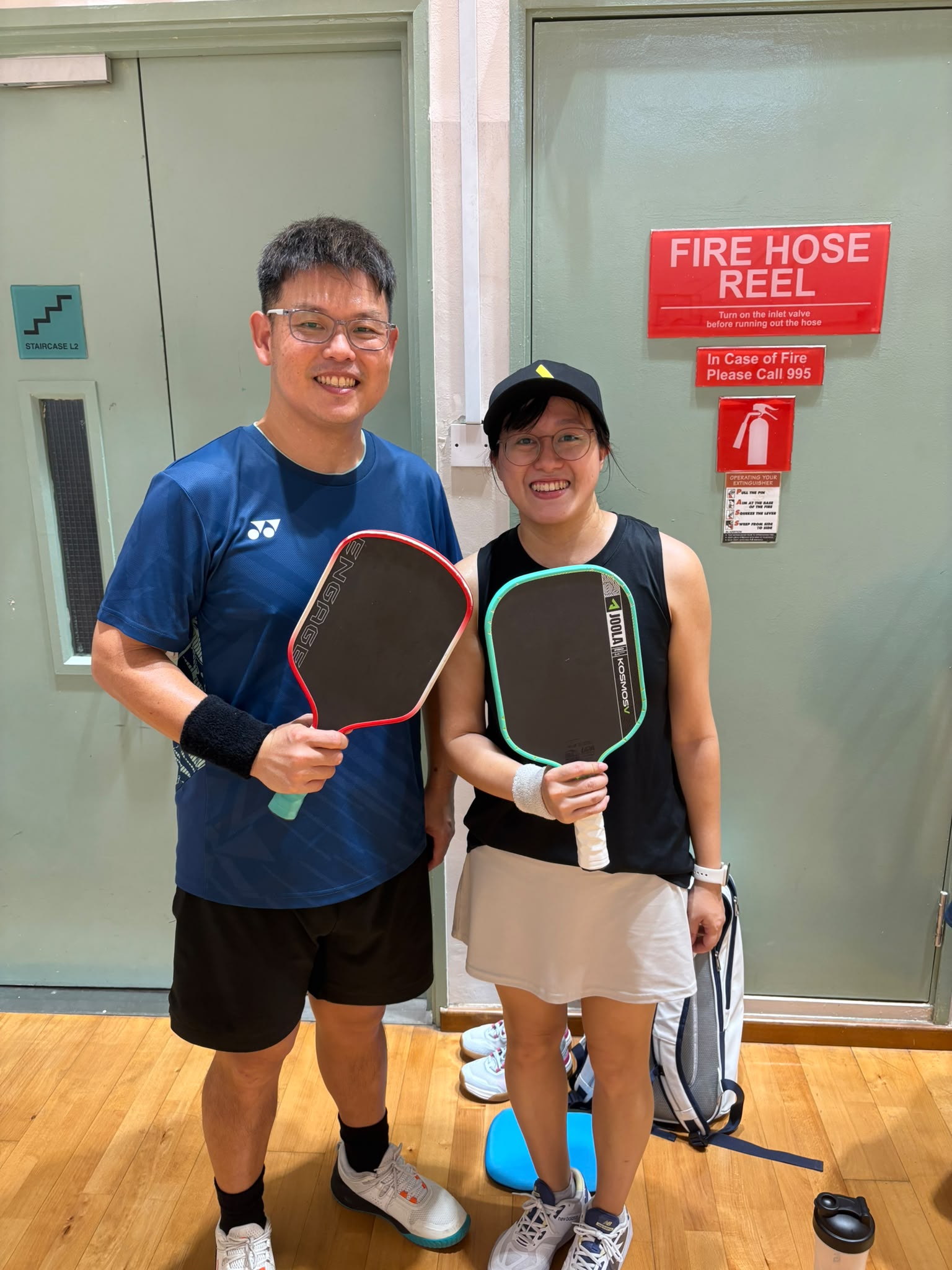
Yew Ho & Belle
Q4) Are you using AI (or any other data gathering) to track individual or team performance and see what can be improved?
Yew Ho: We used AI as part of our training and performance improvement process. We recorded our sessions and uploaded them to an AI analysis platform. It helped us identify our key strengths, weaknesses, tactical patterns, shot selection, positioning, communication, and areas for improvement. We then reviewed the feedback together and incorporated it into our subsequent training sessions to continuously improve both individual and team performance.
Aloysius: While AI provided a great advantage, it certainly did not replace the years of wisdom the team has accrued. Our seasoned players and ex-tennis coaches often spotted subtle technical issues, like wrist-flicking errors or tactical decision-making mistakes, that the software didn't catch. Ultimately, the AI served as a valuable tool to complement the human eye.
Q5) What was the main injury concern in the runup to Pesta Sukan? Who was keeping track of everything/everyone?
Belle: I kept track of most of the players. Mainly to find out on a personal level whom each player preferred to play with or have the most potential with as a partner. Keeping the schedule and updating/reminding the team on upcoming practice and competition dates. Also ensuring the team was well rested prior to more important events like the mock competition under Umeus Club and, of coz, Pesta Sukan itself.
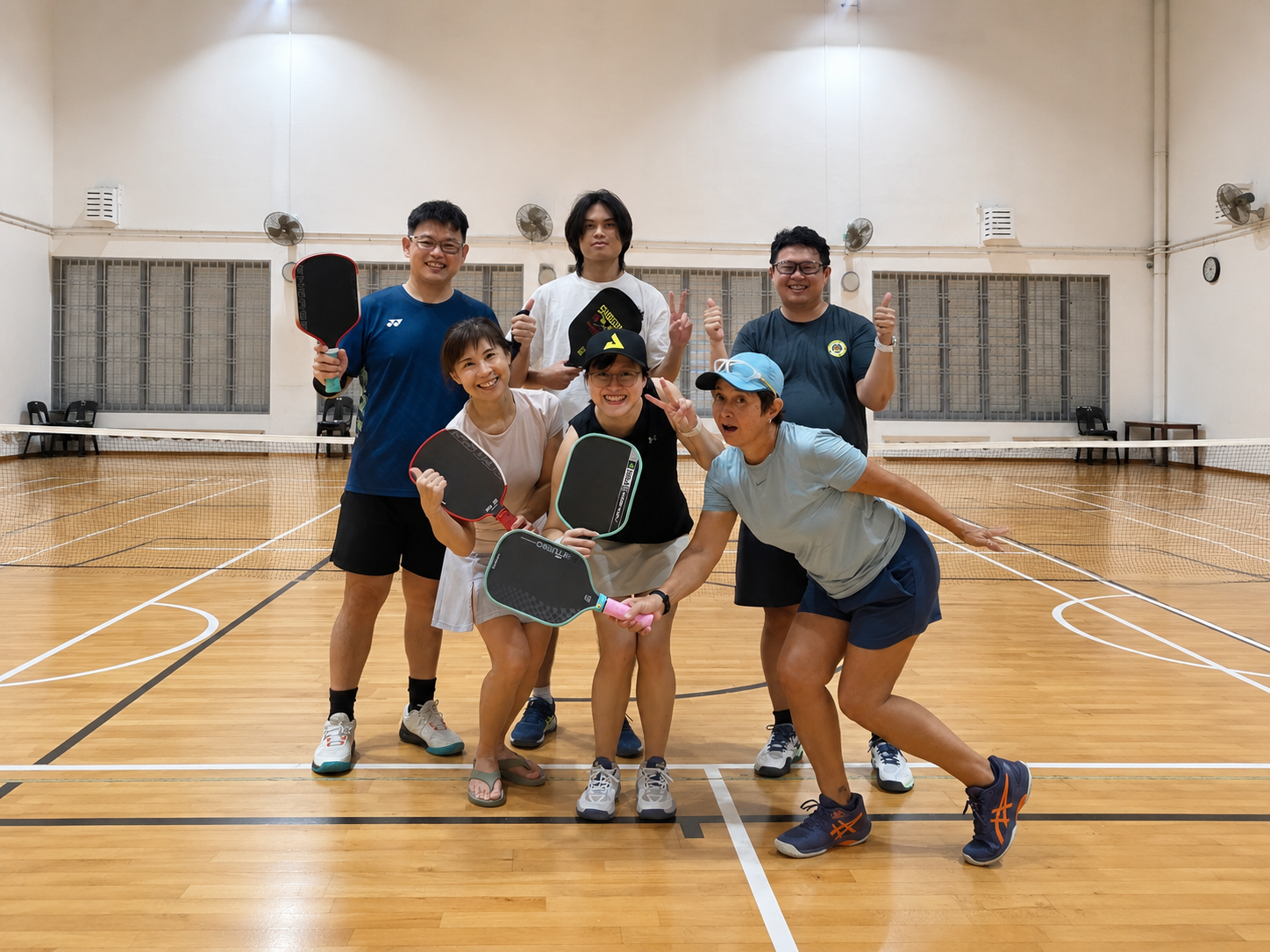
Top left to right: Yew Ho, Joshua, Aloysius
Bottom left to right: Hisako, Belle, Jo Anne
Q6) What are your expectations for the team’s performance and personal goals during Pesta Sukan?
Joshua: As a team, we hope to perform consistently and achieve a good result. Personally, I want to contribute on court, stay confident under pressure, and enjoy the experience with the team.
Austin: I think for all of us, we just want to play our best, give it our all, and have no regrets at the end. Of coz we want good results, but more importantly we want to enjoy the experience and have fun competing together as a team.
Jo Anne: It’s important for me that the team has a meaningful and fun experience no matter the result by supporting and encouraging one another. My personal goal is simply to be a good team player by providing the support and encouragement to the rest and provide some fun moments hopefully 🙃
Show Less ↑